


News Center
News Center
2026 Tank Full-Scenario Industry-Specific Customization Plan: A Practical Guide to Compliance‑Driven Deployment Across Multiple Sectors
Classification: Industry Information
Time2026-07-13
The tank‑industry solution is a full‑process, customized deployment service system tailored to diverse storage scenarios. In 2026, domestic demand for industrial storage continues to rise, and an appropriate tank‑configuration strategy directly impacts both production safety and operational costs. According to publicly available survey data from the domestic general equipment manufacturing sector in 2026, the annual incremental demand for storage tanks across downstream industries has increased by 7.2% year over year, with a growing number of companies placing greater emphasis on the scientific soundness of their tank‑supporting solutions.
Core Application Context of the Storage Tank Industry in 2026
Currently, application scenarios for storage tanks across various industries are becoming increasingly specialized. Traditional, one-size-fits-all configurations can no longer meet the diverse storage requirements of different media, and the adoption of customized industry-specific solutions is growing year by year.
Downstream Industry Tank Storage Demand Growth Trend
In 2026, the demand for tank upgrades across multiple downstream sectors—including chemicals, grain and oil, pharmaceuticals, and new energy—will continue to grow. According to mainstream industry data, compliance‑related tank retrofitting in the hazardous chemical storage sector accounts for 42% of total orders, while annual demand for food‑grade tanks has increased by 11%. Overall, the market is trending toward greater specialization and regulatory compliance. Leveraging more than a decade of experience in tank R&D and manufacturing, Hubei Xianghua Mechanical equipment co.,ltd. has served over 1,200 customers across various industries, with solutions tailored to accommodate the vast majority of standard application scenarios.
Common Pain Points in Current Tank Applications
Industry-wide surveys reveal that nearly 30% of companies have encountered issues such as corrosion‑protective coating delamination, process‑media leakage, and excessive operation‑and‑maintenance costs during tank service. The root cause is the failure to tailor equipment selection to specific operating conditions in the early design phase; instead, generic‑purpose tanks were chosen, leading to inadequate subsequent adaptability and a host of potential risks.
Core Selection Logic for Tank Industry Solutions
The selection of solutions in the tank‑storage industry should center on three key dimensions—storage‑medium properties, environmental conditions, and regulatory compliance—to avoid downstream risks arising from an uncritical pursuit of low cost.
Principle of Storage Media Attribute Matching
The material requirements for storage tanks vary significantly depending on the type of stored medium. For conventional neutral substances, carbon steel is typically sufficient; highly corrosive materials necessitate specialized anti-corrosion linings; and food-grade products require stainless steel of grade 304 or higher. In every stage of material selection, it is essential to perform tailored calculations based on the medium’s pH, temperature, density, and other relevant parameters.
Key Points for Venue Adaptation Adjustments
Storage tank placement areas are categorized into indoor, outdoor, and underground tank farms, among other types. Outdoor tanks require supplementary measures to protect against sunlight, wind, and freezing, while underground tanks necessitate additional provisions for pressure resistance and leak prevention. For each specific scenario, design adjustments should be guided by the relevant industry standards.
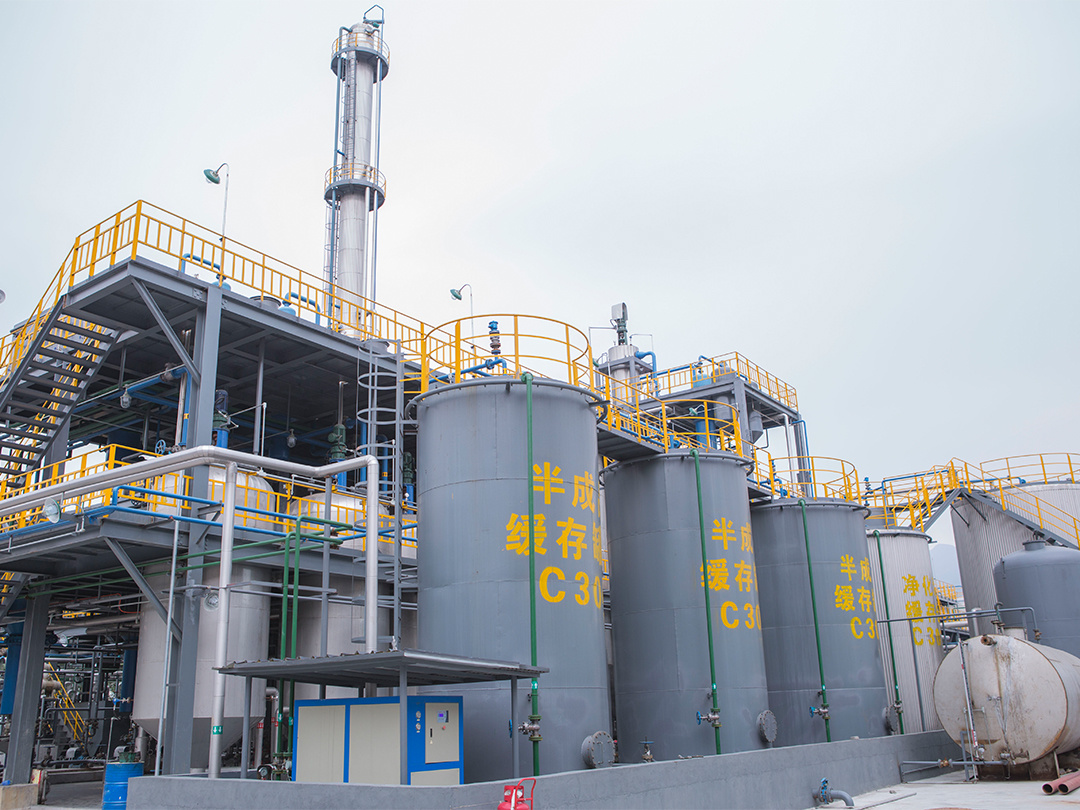
Customized Deployment Plan for Storage Tanks in the Chemical Industry
In the chemical industry, storage tanks must comply directly with safety production regulatory requirements, and all configurations of the dedicated solution must meet national standards for the storage of hazardous chemicals.
Standards for the Configuration of Storage Tanks for Hazardous Chemical Media
For storage scenarios involving flammable, explosive, or highly corrosive hazardous chemicals, the associated storage tanks must be equipped with ancillary devices such as real-time liquid-level monitoring, leak detection alarms, static‑electricity grounding, and emergency shut‑off valves. All such devices must undergo regular calibration and verification to ensure compliance with the inspection requirements of the safety supervision authorities. Tank manufacturing manufacturer -All tank solutions for the chemical industry provided by Hubei Xianghua Mechanical equipment co.,ltd comply with the latest 2026 safety production standards. Relevant case studies can be found on the official website at www.hbxhjx.com.cn.
Integrated Planning for Centralized Tank Farms in Chemical Industrial Parks
The centralized tank farm within a chemical industrial park requires comprehensive, coordinated planning. Adequate safety clearances must be maintained between tanks storing different product categories, and a unified fire‑protection and emergency response system should be in place. The overall plan may only be implemented after undergoing joint verification by multiple departments, thereby mitigating the safety risks associated with the independent installation of individual storage tanks.
Compliance Configuration Standards for Storage Tanks in the Grain, Oil, and Food Industries
Storage tanks used in the grain, oil, and food industries must fully comply with relevant food-contact material standards to prevent contamination of stored materials.
Key Considerations for the Configuration of Edible Oil Storage Tanks
Storage tanks for edible oils such as soybean oil and rapeseed oil shall have internally mirror‑polished surfaces to eliminate sanitary dead zones, and be equipped with accessible manholes and ventilation systems to facilitate routine cleaning and disinfection, thereby preventing rancidity and spoilage associated with long‑term oil storage.
Brewing Material Tank Adaptation Solution
For storage applications involving fermented and brewed products such as alcoholic beverages and soy sauce, the corresponding storage tanks must be equipped with temperature-control systems to facilitate adjustment of the internal storage temperature, thereby meeting the process requirements of different fermentation stages and ensuring consistent product quality.
Comprehensive Lifecycle Operation and Maintenance Support Plan for Storage Tanks
A scientifically sound operations and maintenance plan can effectively extend the service life of storage tanks and reduce long-term operating costs.
Daily Inspection and Maintenance Procedures
Daily tank inspections shall cover external leakage checks, verification of auxiliary equipment, and cross‑checking of pressure and level readings, conducted according to a schedule of weekly inspections, monthly inspections, and annual comprehensive assessments, to promptly identify potential hazards.
Regular Inspection and Refurbishment Service Mechanism
Regularly used storage tanks require a comprehensive coating‑inspection every 2–3 years, with localized touch‑up and recoating applied to areas showing wear, thereby preventing corrosion from progressing and causing tank leaks. Relevant services can be arranged through specialized contractors who provide on‑site inspections and maintenance.
Implementation Steps for the Storage Tank Industry Solution
A standardized implementation process can ensure the smooth deployment of solutions in the tank‑storage industry, preventing delays and addressing issues such as inadequate compatibility.
- On-site Survey: Our technicians visit the site to verify site-specific parameters and storage requirements, and to refine and clarify the list of project requirements.
- Customized Solutions: Based on your requirements, we will provide selection drawings, a list of recommended components, and a detailed budget for your review and approval.
- Production and Delivery: Manufacture the storage tanks according to the confirmed specifications, transport them to the project site, and complete installation and commissioning.
- Acceptance and Delivery: Collaborate with the customer to complete compliance testing, deliver operations and maintenance training materials, and officially put the system into production.
| Comparison dimension | Carbon Steel Storage Tank Solution | Stainless Steel Storage Tank Solution | Internal Lining Anti-Corrosion Tank Solution |
|---|---|---|---|
| Applicable Scenarios | Conventional neutral material storage | Food- and pharmaceutical-grade material storage | Storage of highly corrosive materials |
| Estimated service life | 10–15 years | 2018–2025 | 2012–2020 |
| Unit cost | Low | Middle and high | Medium |
Frequently Asked Questions
Q: Are the installation and acceptance standards for storage tanks standardized across different industries?
A: Acceptance criteria for storage tanks vary across industries. In the chemical sector, compliance with safety supervision regulations is required; in the food industry, adherence to relevant requirements from the food and drug administration is necessary. Testing must be conducted in accordance with the applicable standards.
Q: How do you choose between a vertical storage tank and a horizontal storage tank to ensure the most suitable option?
A: When site space is ample, prioritize vertical storage tanks to reduce unit costs; in situations where headroom is limited, opt for horizontal storage tanks, with adaptability taking precedence over cost considerations.
Q: Can existing old storage tanks be retrofitted and upgraded to meet new storage requirements?
A: Following a thorough inspection by qualified technical personnel to verify the tank’s structural integrity, and subject to compliance with applicable regulations, internal lining modifications and upgrades to ancillary equipment can be carried out, thereby reducing the cost of replacement.
Keyword: 2026 Tank Full-Scenario Industry-Specific Customization Plan: A Practical Guide to Compliance‑Driven Deployment Across Multiple Sectors
RELATED INFORMATION
Company Dynamics
-
Prospective clients visited Hubei Xiang Hua Machinery for inspection and exchange
Time:2025-05-10
-
"Cultivation and Application Integration" New Exploration: In-depth Cooperation Between Xiangyang Human Resources Agencies and Zhongbo Welding School
Time:2025-04-29
-
Hubei XiangHuaJi was awarded the "2024 Hubei Provincial Manufacturing Industry Single-Item Champion Enterprise"
Time:2025-04-29
-
Visit from German environmental giant! Hubei Xiang Hua Machinery wins new opportunities for localized production cooperation with its hard-core strength
Time:2025-04-09
-
The BaoKang County Employment Bureau organized a group to inspect the ZhongBo Welding Training School under Hubei XiangHua Machinery.
Time:2025-04-01
-
Laohukou Municipal Human Resources and Social Security Bureau leaders investigated Xiang Hua Machinery's Zhongbo Welding School, jointly exploring new paths for 'industry-education integration'.
Time:2025-03-25
-
Hubei Xiang Hua Machinery conducts internal training on "Organizational Growth and Efficient Execution"
Time:2025-03-14
-
The Ministry of Finance conducted a survey of Zhongbo Welding Training School, a subsidiary of Xiang Hua Machinery in Hubei Province
Time:2025-03-12
-
Hubei Xianghua Machinery demonstrates the dual responsibility of corporate strength and social responsibility, winning the favor of potential clients again.
Time:2025-02-27
-
Hubei Xianghua Machinery conducts DeepSeek application and practice training, Chairman Xiang Huailin emphasizes the opportunities and challenges of AI intelligence.
Time:2025-02-26
-
Strive for a "good start" in the first quarter, work hard to achieve excellent results.
Time:2025-02-25
-
Hubei Xianghua Machine made its appearance at the Xiangyang "Spring Breeze Action" job fair, offering over 70 quality job positions.
Time:2025-02-07
-
Hubei Xianghua Machinery undertakes the overall delivery of 300,000 cubic meters/day gas liquefaction skid-mounted equipment.
Time:2025-01-18
-
Hubei Xianghua Machinery | Zhongbo Welding Skills Training Helps Improve Skills and Increase Employment Income for the Public
Time:2025-01-14
-
Hubei Xianghua Machinery | Lean Improvement in Action (Part 1)
Time:2025-01-08
-
2025 is here with a fresh start | The official website of Hubei Xianghua Machinery has been completely upgraded and launched.
Time:2025-01-06
-
Striving for new achievements and creating a new situation | Hubei Xianghua Machinery 2024 Year-End Summary
Time:2025-01-04
-
Unwavering in our mission, we forge ahead to write a new chapter - New Year’s message for 2025 from Chairman Xiang Hualin of Hubei Xianghua Machinery.
Time:2025-01-03
-
The second welding skills competition for Xianghua Machinery interns and graduates of Zhongbo Welding School has successfully concluded.
Time:2025-01-02
-
Chairman Kang Heping of Sanbao Group and his delegation visited and exchanged ideas at Hubei Xianghua Machine.
Time:2024-12-18
-
Xianghua Machinery is fully operational in the fourth quarter, busy with deliveries, striving to achieve a 'full house' success!
Time:2024-11-18
-
The first party branch of the Human Resources and Social Security Bureau of Xiangyang City and the temporary party branch of the seventh inspection team of the municipal party committee visited for research.
Time:2024-10-28
-
Fighting for a "Year-Round Red", Hubei Xianghua is busy with multi-line operations.
Time:2024-09-29
-
The Secretary of the Party Leadership Group and Director of the Hubei Provincial Human Resources and Social Security Department came to the Hubei Xianghua Welding School for research.
Time:2024-09-27
-
Hubei Xianghua Machinery participated in the "Oil and Natural Gas Exhibition" with a focus on: the comprehensive utilization of waste mineral oil recycling and the LNG natural gas project receiving significant attention!
Time:2024-09-25
-
Hubei Xianghua Machinery will participate in the 29th Kazakhstan International Oil and Gas Exhibition in 2024.
Time:2024-09-24
-
Hubei Xianghua machinery manufacturing has taken solid steps towards high-quality development.
Time:2024-08-26
-
Stirring device of reactor manufacturer equipment
Time:2024-07-09
-
The Hubei Xianghua Machine held a kick-off meeting for the Lean Benchmark Factory Planning Project.
Time:2024-07-02
-
Hubei Xianghua organized a "July 1" themed party day event to celebrate the 103rd anniversary of the founding of the Party.
Time:2024-07-01
-
Join hands to build the "Belt and Road" and explore a new chapter of prosperous future | Hubei Xianghua Machinery visits friendly cooperative foreign trade enterprises
Time:2024-06-17
-
Introducing advanced production equipment, the orders for Hubei Xianghua Machinery are accelerating!
Time:2024-06-08
-
Hubei Xianghua Machinery and Hubei University of Technology jointly build a high-quality school-enterprise cooperation model.
Time:2024-06-01
-
Important partner from Xianghua, Hubei visits the production site to conduct a comprehensive inspection of the skid-mounted equipment production!
Time:2024-05-27
-
Hubei Xianghua Machine was invited to participate in the Hubei Province "Manufacturing Leaders" industry chain and supply chain docking event.
Time:2024-05-18
-
Hubei Xianghua Machinery Equipment signed a strategic cooperation agreement with Greeenmei for a trade-in program.
Time:2024-05-07
-
Promoting the development of new quality productivity with equipment updates | Hubei Xianghua Machine introduces a brand new automatic welding machine for edge beams
Time:2024-05-06
-
Hubei Xianghua machinery equipment is making solid progress, showcasing a new style in the pressure vessel manufacturing industry.
Time:2024-04-30
-
Empowerment through Learning | "PDCA Cycle Work Method" Training and "New Quality Productivity" Study
Time:2024-04-23
-
14 stainless steel reactors manufactured by Hubei Xianghua Machinery Equipment have been shipped.
Time:2024-04-09
-
Xianghua Machinery Equipment has completed the delivery of 3 stainless steel reactors for Hubei Benxing New Energy Company.
Time:2024-03-16
-
Xianghua Machinery Equipment has completed the delivery of 3 stainless steel reactors for Hubei Benxing New Energy Company.
Time:2024-03-08
-
Xianghua Machine held a monthly meeting to deploy and promote key work.
Time:2024-02-29
-
【Spring Festival does not stop work, striving to ensure delivery】 14 phosphorus reactors from Hubei Darun successfully delivered
Time:2024-02-19
-
湖北襄化机2024年年会暨颁奖典礼圆满举行
Time:2024-02-06
-
Technical analysis of new DMF composite solvent refining process in Hubei chemical machinery
Time:2020-06-18
-
The construction of 8 expressways in Xiangyang City is progressing in an orderly manner, which is beneficial for the development of the waste oil recycling industry.
Time:2020-06-18
-
How Hubei Chemical Machinery Strengthens the Heat Transfer Performance of Fin Tube Heat Exchangers
Time:2019-01-19
-
Enhanced heat transfer technology for shell and tube heat exchangers in Hubei chemical machinery
Time:2019-01-19
-
The general types of methods for enhancing heat transfer in Hubei chemical machinery shell courses.
Time:2019-01-19
Industry Information
-
2026 Tank Full-Scenario Industry-Specific Customization Plan: A Practical Guide to Compliance‑Driven Deployment Across Multiple Sectors
Time:2026-07-13
-
2026 Customized Solutions for the Entire Reactor Industry: A Practical Guide to Enhancing Quality and Efficiency Across Multiple Sectors
Time:2026-07-08
-
2026 Hubei Xianghua Pressure Vessel Full Product Line Overview and Selection Guide
Time:2026-06-29
-
Customized solutions from non-standard pressure vessel manufacturers
Time:2025-12-23
-
Overview of chemical storage tank manufacturers and materials
Time:2025-04-25
-
Stainless steel liquid ammonia storage tank manufacturers
Time:2025-04-15
-
Working principle of stainless steel reaction kettle
Time:2025-04-08
-
Advantages of Material Selection by Pressure Vessel Manufacturers
Time:2025-03-31
-
Advantages of Pressure Pipeline Installation Manufacturers
Time:2025-03-24
-
Advantages of Liquid Ammonia Storage Tank Manufacturers
Time:2025-03-20
-
Application scenarios and material selection of stainless steel reaction kettles
Time:2025-03-17
-
Manufacturing Process and Standards for Pressure Vessels
Time:2025-03-07
-
The application prospects of stainless steel storage tanks in the environmental protection field
Time:2025-02-28
-
Stainless Steel Reactor
Time:2025-02-20
-
Customers interested in Hubei Xianghua machinery visited for inspection and communication, seeking to jointly explore a new chapter of development.
Time:2025-02-18
-
Stainless Steel Reactor Manufacturing Factory
Time:2025-02-12
-
Stainless Steel Tank / Pressure Vessel Manufacturing Manufacturer
Time:2025-02-08
-
Pressure vessel manufacturing factory
Time:2025-01-16
-
Chemical storage tank manufacturing factory
Time:2025-01-10
-
The working principle of a tubular heat exchanger
Time:2024-12-25
-
Safety operation procedures for pressure vessel manufacturers
Time:2024-12-17
-
Inspection items and cycles for chemical storage tanks
Time:2024-12-13
-
What are the methods for corrosion prevention of storage tanks? Construction plan for corrosion prevention of the inner wall of storage tanks.
Time:2024-12-09
-
Inspection items of chemical storage tank manufacturers
Time:2024-12-03
-
How do heat exchanger manufacturers repair corrosion?
Time:2024-11-28
-
Causes of heat exchanger corrosion
Time:2024-11-26
-
Classification of heat transfer principles in heat exchanger manufacturers
Time:2024-11-20
-
Xianghua Machinery is fully operational in the fourth quarter, busy with deliveries, striving to achieve a 'full house' success!
Time:2024-11-18
-
Advantages of stainless steel condenser manufacturers
Time:2024-11-16
-
Maintenance and Inspection of Chemical Storage Tank Manufacturers and Usage Precautions
Time:2024-11-11
-
Precautions for the manufacturing and installation of tank manufacturers
Time:2024-11-07
-
Tank manufacturer production and installation construction plan
Time:2024-11-05
-
What are the differences between horizontal tanks and vertical tanks? Which one should be chosen, horizontal or vertical tanks?
Time:2024-10-30
-
Classification of manufacturers of tubular heat exchangers
Time:2024-10-25
-
Heating methods of reaction vessels
Time:2024-10-22
-
Introduction to the function and principle of the reactor stirrer
Time:2024-10-09
-
What is the typical capacity of an LNG liquefied natural gas storage tank?
Time:2024-10-07
-
How to choose a manufacturer of stainless steel storage tanks
Time:2024-10-05
-
The lean benchmark factory project continues to advance, empowering industrial upgrades and optimizing customer value experience.
Time:2024-09-30
-
Design specifications and requirements for liquid ammonia storage tank manufacturers
Time:2024-09-24
-
What are the classifications of chemical storage tank manufacturers?
Time:2024-09-18
-
Classification of equipment for pressure vessel manufacturers
Time:2024-09-15
-
What conditions must a pressure vessel manufacturer meet to be considered a special equipment?
Time:2024-09-12
-
What are the operating conditions of pressure vessel manufacturers?
Time:2024-09-09
-
Types of safety accessories and inspection cycles for pressure vessel manufacturers
Time:2024-09-06
-
Basic requirements for material selection by pressure vessel manufacturers
Time:2024-09-03
-
The Deputy Director of the Provincial Human Resources and Social Security Department, the Secretary of the Party Committee and Director of the Provincial Labor and Employment Service Center, and their delegation visited the Xiangyang Zhongbo Welding Skills Training School under Hubei Xianghua Machine for research.
Time:2024-08-31
-
What materials are used by pressure vessel manufacturers? What is the manufacturing process of pressure vessels?
Time:2024-08-28
-
Measures taken by pressure vessel manufacturers to prevent accidents
Time:2024-08-26
-
Regular inspection content for pressure vessel manufacturers
Time:2024-08-21
-
How often should pressure vessels be inspected? What is the service life of pressure vessels?
Time:2024-08-17
-
Manufacturing process of stainless steel storage tank manufacturers
Time:2024-08-12
-
Analysis of the structure of common storage tanks by storage tank manufacturers
Time:2024-08-08
-
Safety precautions for the use of reaction vessels
Time:2024-08-05
-
The five major components of the pressure vessel shell outside the cylinder body
Time:2024-07-30
-
Theoretical Manufacturing and Main Characteristics of Pressure Vessel Manufacturers
Time:2024-07-27
-
Composition of the cylinder body in pressure vessel manufacturing
Time:2024-07-24
-
Pressure vessel equipment manufacturer
Time:2024-07-22
-
Inspection and testing standards for atmospheric pressure storage tank manufacturers
Time:2024-07-16
-
Classification of reactor equipment manufacturers
Time:2024-07-05
-
Classification and maintenance of condensers
Time:2024-06-26
-
The difference between evaporators and condensers
Time:2024-06-22
-
Precautions for Using Heat Exchanger Manufacturers
Time:2024-06-17
-
Tube-type heat exchanger - heat exchanger manufacturer
Time:2024-06-11
-
Advantages and disadvantages of floating head and U-tube heat exchangers
Time:2024-06-07
-
Classification of heat exchanger manufacturing - heat exchanger manufacturers
Time:2024-06-03
-
Basic knowledge of plate heat exchangers
Time:2024-05-30
-
Heat exchanger production process
Time:2024-05-20
-
Considerations for Choosing a Reactor Manufacturing Factory
Time:2024-05-16
-
Characteristics of the products from the manufacturer of reactor equipment
Time:2024-05-11
-
Classification of Chemical Storage Tanks - Tank Production Manufacturers
Time:2024-05-04
-
Precautions for Using Stainless Steel Reactors Produced by Pressure Vessel Manufacturers
Time:2024-04-30
-
Structural performance and advantages of stainless steel reactors
Time:2024-04-27
-
Difference between stainless steel reactors and enamel reactors
Time:2024-04-17
-
Welding between mechanical equipment components of pressure vessels
Time:2024-04-12
-
Basic knowledge of openings and pipe connections in pressure vessel shells
Time:2024-04-08
-
Pressure vessel combined cylinder and sealing device
Time:2024-03-29
-
Introduction to Single-Layer Cylindrical Pressure Vessels
Time:2024-03-26
-
Basic structure of pressure vessel equipment manufacturing
Time:2024-03-21
-
Installation process and construction key points of pressure pipelines
Time:2024-03-14
-
Requirements for the safety technology of pressure vessels
Time:2024-03-09
-
The difference between single-layer and double-layer enamel reaction kettles
Time:2024-03-05
-
What is a pressure vessel? What are the precautions for using pressure vessels?
Time:2024-02-29
-
Safety management of mechanical engineering equipment
Time:2024-01-31
-
Seven Major Safety Supervision Guidelines for Pressure Vessel Special Equipment
Time:2024-01-22
-
Product features of stainless steel reaction kettle
Time:2024-01-10
-
What types of stainless steel tanks are there for pressure vessel equipment?
Time:2023-12-28
-
Chemical machinery - Manufacturing demand for storage equipment for hazardous waste enterprises that regenerate waste oil into base oil.
Time:2020-07-11
-
Design Principles for Hazardous Waste Storage Facilities for Comprehensive Utilization of Waste Mineral Oil
Time:2020-06-30
-
Requirements for the site selection of storage facilities for waste oil regeneration base oil enterprises
Time:2020-06-27
-
Chemical Machinery - The first promotion meeting of the Green Full Xiangyang Re-Upgrade Action in Xiangyang City was held.
Time:2020-06-27
-
Chemical machinery - disposal and utilization of waste mineral oil, common illegal activities
Time:2020-06-23
Exhibition style
-
Exhibition style
Time:2024-11-21
-
Exhibition style
Time:2024-11-21
-
Exhibition style
Time:2024-11-21
-
Exhibition style
Time:2024-11-21
-
Exhibition style
Time:2024-11-21
-
Exhibition style
Time:2024-11-21
-
Exhibition style
Time:2024-11-21
-
Exhibition style
Time:2024-11-21
-
Exhibition style
Time:2024-11-21
-
Exhibition style
Time:2024-11-15
-
Exhibition style
Time:2024-11-15
-
Exhibition style
Time:2024-11-15
-
Exhibition style
Time:2024-11-15
-
Exhibition style
Time:2024-11-15
-
Exhibition style
Time:2024-11-14




Telephone:86-0710-3520276
Fax: 86-0710-3513001
Mobile:86-15971109088
Website:http://www.hbxhjx.com.cn/
Address: No.22, Tianshun Avenue, Xiangcheng Economic Development Zone, Xiangyang City, Hubei Province

micro signal

Video Number
Copyright © Hubei Xianghua Mechanical equipment co.,ltd